Auckland Walking Tour: Exploring New Zealand's Largest City in 4K
Love Travel New Zealand & Beyond
Destinations / New Zealand / Auckland / Auckland
Auckland travel safety: Low risk (21/100), November 2026
Yes. The emergency department at Auckland City Hospital is 1.3 km away and floods are the main hazard on record, 4 in five years.
Checked 22 November 2026: no disaster alerts nearby in 14 days.
Auckland scores 21/100 on our travel risk index (Low). The US State Department rates New Zealand Level 1 (Exercise Normal Precautions, updated 29 Apr 2026); the UK has no advice against travel; Canada says: exercise normal security precautions. No GDACS hazard alerts within 100 km and no magnitude 5+ earthquakes within 150 km in the last 14 days. No change in government advice in the last 7 days.
For Auckland (New Zealand) official advice is the national advice for New Zealand: the US asks travellers to exercise normal precautions (Level 1), and the UK has no warning against travel. In the last five years GDACS and USGS recorded 4 floods (mostly in January and May) and 1 drought event (mostly in July) near Auckland. The nearest hospital with an emergency department in our map data is Auckland City Hospital, 1.3 km SSE. Auckland scores 21/100 (Low) using town-level data; lower is safer.
Get a personalized assessment for your trip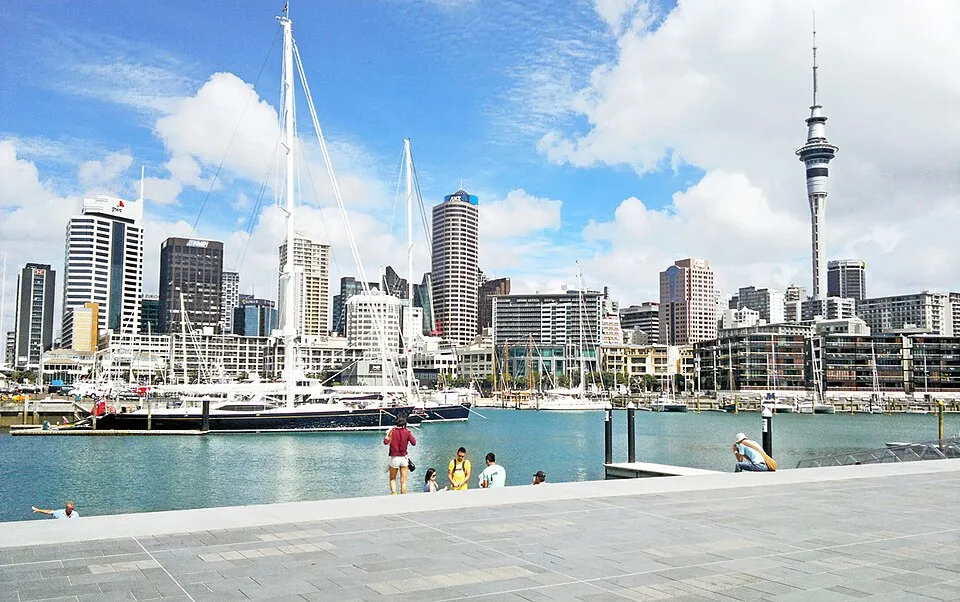
Auckland currently sits at 21/100 on our composite travel-risk index, which puts it in the low-risk tier. Most travelers report routine, uneventful trips and the page below covers the few category-specific things to stay alert for. The highest-rated risk category for Auckland is crime (22/100), and the lowest is disease & health (10/100). The guide text last changed on November 11, 2026; the baseline category scores reflect analytical indicators, layered with live conditions throughout the day. Live conditions — weather at most hourly (MET Norway), US State Department advisory every 6 hours, GDACS disaster alerts every 30 minutes, CDC health notices every 12 hours, and news every hour — are cached at the source and refreshed automatically when stale.
Driven by: natural hazards (40/100) and security (17/100).
A score of 21 is higher than 2% of the cities we score.
Floods: 4 within 100 km in five years, mostly in May and January.
Emergency department 1.3 km away.
Risk score 21/100, lower is safer · method
November in Auckland: 13 to 19 °C, 59 mm of rain, about 14.2 hours of daylight.
Driest: January, 56 mm. Wettest: July, 115 mm.
Five-year record nearby, by month: January, 1 flood; May, 2 floods; July, 1 flood and 1 drought.
GDACS, USGS
Auckland is a city on the North Island, New Zealand. It is in Auckland Region. Population 1,470,100 (2020). Water nearby: Waitematā Harbour, Manukau Harbour. Twin towns include Guangzhou, Los Angeles and Brisbane. Founded in 1840.
Official site: aucklandnz.com. More on Wikipedia: Auckland. Facts: Wikidata (CC0).
© OpenStreetMap contributors
| Emergency department | Auckland City Hospital | 1.3 km S |
|---|---|---|
| Pharmacies within 2 km | 10 | |
| Police | Auckland Central Police Base | 0.4 km SW |
| Railway station | Te Waihorotiu | 0.2 km W |
| Airport with scheduled flights | Auckland International Airport (AKL) | 18 km S |
More hospitals and clinics: Cancer Society, 1.6 km SSE; Mercy Hospice Auckland, 1.6 km W.
Nearby risk scores: Auckland 21, Northcote 22, Waitakere 22; New Zealand overall 22.
Auckland, New Zealand currently maintains a low risk safety profile with a baseline composite score of 21 out of 100 and a US State Department Advisory Level 1. Travelers should be aware of an ongoing drought in New Zealand as well as a Level 1 global measles health notice from the CDC.
AI-summarized strictly from the live public-source data below (US State Dept advisory, GDACS, CDC, Google News). Auto-refreshed at most once per day on the first visit. Not official advice.
Live conditions last refreshed: Nov 22, 2026 13:44 UTC
Guidance based on our scores and official advice — not a measured score.
Daytime transit and exploration in central areas are generally safe and routine. Standard alertness in crowded transit hubs and tourist plazas is adequate.
After dark, keep to well-illuminated thoroughfares and busy dining/entertainment quarters. Use verified taxis or rideshare apps when returning late.
Guidance based on our scores and official advice — not a measured score.
No group-specific warning is triggered in Auckland for solo travelers (Crime 22/100 · Transport 15/100), women traveling solo (Crime 22/100), families with children (Health 10/100 · Natural disaster 15/100), older travelers (Health 10/100 · Transport 15/100), business travelers (Digital 15/100 · Money 15/100 · Transport 15/100) and lgbtq+ travelers (Advisory 15/100 · Political 10/100): these scores sit in the low-to-moderate range, so standard precautions apply. Local laws affecting LGBTQ+ travelers and gender-specific incident rates are not captured in our scores; check your government's travel guidance.
Pre-Departure Readiness
Even in low-risk destinations, international hospital admission and emergency repatriation costs can escalate rapidly. Ensure primary emergency medical and medical evacuation benefits apply without high deductibles.
Standard policies usually cover Low and Moderate advisory destinations normally, but still check exclusions for adventure activities, pre-existing conditions, and official Level 4 escalations. Standard travel insurance policies commonly invalidate medical, evacuation, and cancellation benefits in any territory under a US Level 4 ("Do Not Travel") or UK FCDO "against all travel" advisory unless a specialized high-risk rider is explicitly purchased.
Source: Grounded open data research & citations
| Hospital access | medium |
|---|---|
| Airport risk | medium |
| Road safety | medium |
| Public transport | medium |
| Tourist scam risk | medium |
| Night safety | medium |
Real-time data refreshed from public sources — weather from MET Norway, official advisory from the US State Department, disaster alerts from GDACS, health notices from the CDC, news from Google News. For an AI-synthesized briefing tailored to your specific trip, run a personalized assessment.
New Zealand - Level 1: Exercise Normal Precautions
Read full advisory → · US Department of State
The Drought notification level is Green.
“~N km away” = event centroid within ~500 km of this location; “country-wide” = a national/regional alert that may not be near this specific city. Source: GDACS · fetched 2026-11-22 13:44:09 UTC
| Hazard | Jan | Feb | Mar | Apr | May | Jun | Jul | Aug | Sep | Oct | Nov | Dec |
|---|---|---|---|---|---|---|---|---|---|---|---|---|
| Floods | 1 | — | — | — | 2 | — | 1 | — | — | — | — | — |
| Droughts | — | — | — | — | — | — | 1 | — | — | — | — | — |
Most flood events within 100 km of Auckland happened in May (2 of 4 in five years).
Source: GDACS, USGS; five years to November 2026.
For consular advice on women's safety, LGBT+ travel, and local laws, see the New Zealand travel advice & laws.
Check the official entry requirements for your nationality before you travel. See the New Zealand entry requirements.
Measles cases are rising in many countries around the world. All international travelers should be fully vaccinated against measles with the measles-mumps-rubella (MMR) vaccine, according to CDC's measles vaccination recommendations for international travel. Country List : Afghan
Source: CDC Travelers’ Health · fetched 2026-11-22 12:05:43 UTC
1991–2020 climate normals
The most weather-stable two-month window for Auckland is September–October, when typical daily temperatures run from about 11°C to 17°C and monthly rain averages 80 mm.
Seasonal planning flags include cyclone season in November–April. These are climate patterns, not forecasts.
Climate normals are planning context, not a short-range forecast. Source: NASA POWER (NASA Langley Research Center), 1991–2020 averages. Refreshed Nov 5, 2026.
Calculate risk for these travel dates Compare seasonal windows →
Practical safety map
Auckland has 9 hospitals, 9 police stations, 5 embassies, 10 pharmacies and 5 fire stations within 7 km of the city center in the latest OpenStreetMap extract.
The interactive map loads when it approaches the viewport.
Map and facility data © OpenStreetMap contributors. Locations can be incomplete or outdated; confirm before relying on them. See this destination’s numbers or browse emergency numbers by country.
Visual field context
Love Travel New Zealand & Beyond
Island Hopper TV Travel Highlights
Videos are third-party context, not official advice. YouTube is contacted only after you press play; playback uses YouTube’s privacy-enhanced domain.
| Police | 111 |
|---|---|
| Ambulance | 111 |
| Fire | 111 |
| General | 111 |
See nearby hospitals, police, pharmacies, embassies, and fire stations on the safety map.
| Hospital access | medium |
|---|---|
| Pharmacy access | medium |
| Emergency response | medium |
| English-speaking care | high |
| Evacuation complexity | medium |
Healthcare facilities are generally accessible for travelers in major urban centers like Auckland. English is widely spoken, ensuring clear communication for medical care.
Get a tailored briefing in ~15 seconds, with live weather, advisories, and recent news.
Calculate my trip risk| When | Score change | Tier | Reason / source |
|---|---|---|---|
| Nov 18, 2026 | 20 → 21 | low | Method change (scoring v2) scoring v2 |
| Oct 9, 2026 | 21 → 20 | low | Method change (scoring v2) scoring v2 |
| Oct 8, 2026 | 20 → 21 | low | Method change (scoring v2) scoring v2 |
| Sep 27, 2026 | 17 → 20 | low | Method change (scoring v2) scoring v2 |
| May 15, 2026 | — → 17 | low | Data update Editorial baseline 2026-05-14 (round 2: Numbeo + WHO + State Dept + GPI + EPI references) |
Every editorial change to Auckland's composite score is logged here, with the source and reason for the change. Live data overlays (weather, advisories, disaster alerts, news) refresh continuously on their own cadences and are not recorded as score changes — see the Live conditions section above for current overlay state.
No traveller has reported on Auckland yet. If you have been, your report helps the next visitor.
We document the baseline sources, coverage scope, and data inputs for this destination below.
Live data overlays on this page refresh asynchronously on the source cadences shown above. Run an assessment to create a trip-specific briefing using your dates and traveler profile.
Methodology · Full data-source registry · Report a correction
Cities our visitors look up most frequently — useful for trip planning, comparison, or just curiosity.
Travel Risk Calculator provides estimated travel-threat information for preparation purposes only. It does not replace official government advisories, medical advice, emergency alerts, immigration rules, insurance advice, police guidance, embassy information, or professional security consultation.